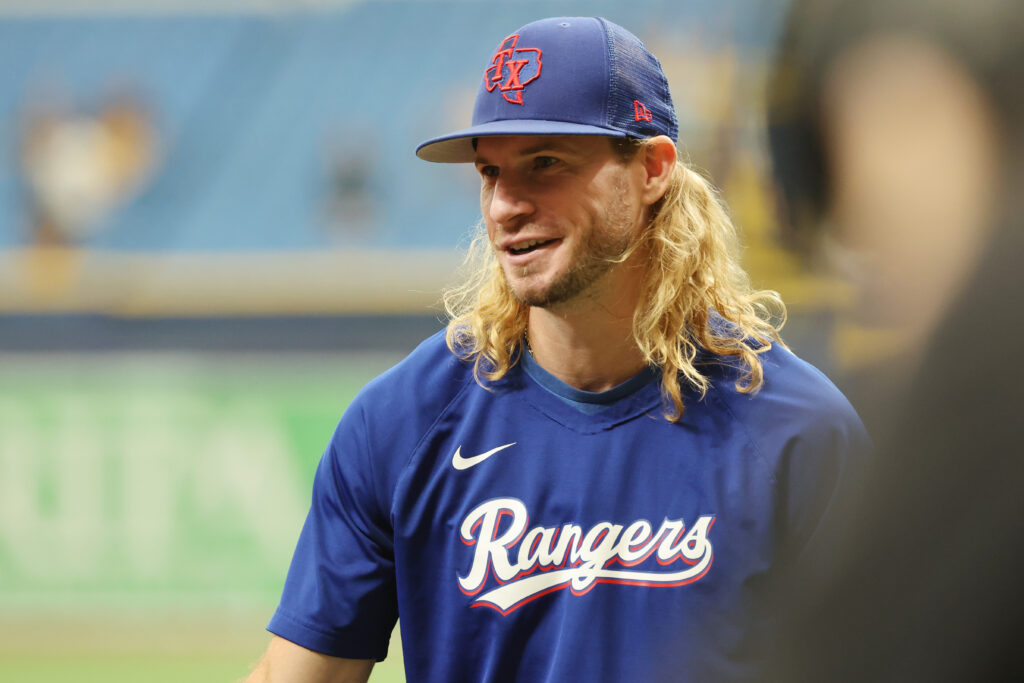
Sunday, September 29, 2024

Is 1953 Bowman the most error-filled card set in history?

1953 Bowman is the perfect set on its front: beautiful and pure.


But error lurks within its backs. 


Can you see the monstrous mistake? 

 If you look online for "1953 Bowman errors," you won't find much. PSA's article on 1953 Bowman Color mentions a few fumbled birthdates, a picture of one player used for someone else's card, and one mediocre pitcher (Al Corwin) with two cards. That's it. 


Al Corwin, #126

Al Corwin, #149

If you look further on the web, you won't find any errors in the set more substantial than a few misspelled names. 

As far as I can tell, no one has ever pointed out that almost every single card in both the Color and Black and White sets has some kind of statistical error. For example, Allie Reynolds' career ERA was 3.30, not 2.76, going into 1953. 

Most of the cards have miscalculated career batting averages or ERAs, just like Reynolds. Many of the errors are small - a 5.04 ERA instead of 5.02 - but some, like Reynolds, are kind of obscene. And if the batting average isn't wrong, some fielding stat probably is, and some cards even have seasons missing from the career totals. (The most flagrant of these even mention the missing season in the write-up. Al Corwin is a good example. His bio mentions his 5-1 1951 season, but his career stats only show his 1952 season. The backs of his two cards are identical except for the card numbers, so this holds true for #149 too.)


When you put all these different types of errors together, only 29 of the 224 cards Bowman released in 1953 do not have a statistical error. If there's any set with a higher percentage of error cards, I'm unaware of it.

Some back-story: 

I noticed a few cards with truly flagrant errors long before I realized that they were part of a theme. I noticed the mistake in Allie Reynolds' career ERA not too long after I got the card for Christmas, 2019. (An Ode to 1953 Bowman: Christmas Edition) 

If I remember correctly, the card that made me realize that the error was not an isolated event, that 1953 Bowman was rife with the iniquity of incorrectness, was a card I got in a lot this spring: Matt Batts, B&W #22. 


My mathematical mind writhed when I saw a man with 268 hits in 979 at-bats listed as having a batting average of .260. 

When I began noticing all these blatant errors, I wondered whether there might be subtle errors in other cards. I started checking and behold: errors were here, there, everywhere. I began checking every card sometime this summer, and worked on the project off and on until I finally finished yesterday. 

Disclaimer, required by law: The same love of statistics that led me to notice these errors in the first place, and then check every single card for more, also prompts me to provide various statistical breakdowns about aforesaid errors. You have been forewarned.

A preliminary note on my method: My goal was to see how many cards had errors, not to exhaustively determine every single error. For that reason, I only checked a player's fielding stats if his batting stats were squeaky-clean, which means that there may be significantly more fielding stat errors than I found. 

Acknowledgments: I used TCDB's pictures both for my statistical sleuthing and for this post, and Baseball Reference for the players' career totals up to 1952. I used Since I Left You by The Avalanches for musical distraction as I checked and rechecked; stats become banal even to the most hardened stat junkie after a while. 

In Bowman Color, out of 160 cards, 13 are errorless. Of these, three of the cards have no stats listed (44, 69, 93), five are of rookies with just one year of stats (83, 97, 98, 112,153), and one is a coach (95, Wally Moses). Only four cards of players with more than one season in the majors are errorless: 16, Bob Friend; 47, Ned Garver; 53, Del Rice; and 78, Carl Furillo.  

Out of 94 batters, 73 have incorrect batting averages, nine (at least) have incorrect fielding stats, two have incorrect batting counting stats, and five have one or more seasons not included in their career stats. (George Shuba was missing three.)

Out of 53 pitchers, 48 have incorrect ERAs and five have a season not included in their career stats. (Two of the five are Al Corwin.)

Out of eleven coaches and managers, six have incorrect fielding stats, two have incorrect batting counting stats, one is errorless (95, Wally Moses), one has no stats (Charlie Grimm), and one has both incorrect fielding and incorrect batting counting stats: 57, Lou Boudreau. Notice that they all have correct batting averages. 

For Black and White:

Out of 64 cards, 16 are errorless. Of these, eight are rookies with only one year beneath their belts: five pitchers and three batters. The other eight are all pitchers. 

Out of 33 batters, 29 have incorrect batting averages, and one (36, Jim Piersall) has a season missing from his career stats. Only three are errorless, and they're all rookies. 

Out of 29 pitchers, only 14 have incorrect ERAs. Another one has a counting stat error and another one has a season missing from his career stats. Of the thirteen errorless cards, eight are veterans - a relatively impressive number. 

You can actually pinpoint the place where Bowman suddenly started getting their ERAs right. Every pitcher who'd pitched in more than two seasons received incorrect ERAs up to card #40, which gives Larry Jansen's correct career ERA. After that point, Bowman got 7 ERAs correct out of 11 non-rookie pitchers, including five in a row from #40 through #52. 

There were only two managers - Casey Stengel and Bucky Harris. They both have incorrect RBI totals, and Bucky is shorted a game from his career total. 

A clear pattern emerges from the batting averages: In both Color and B&W, a clear majority of the batting averages are too low. In Color,  26 of the listed batting averages are too high while 47 are too low. In B&W, 8 are too high while 21 are too low.

There isn't strong evidence of a pattern in the mistaken ERAs. In Bowman Color, 22 of the listed ERAs are too high while 24 are too low. In Bowman Black and White, four are too high while ten are too low. 

For your possible delectation, I will list the most egregious errors:

#22 Color - Bob Porterfield's ERA should be 3.56, not 4.66
#53 B&W - Morrie Martin's ERA should be 4.64, not 5.67
#114 Color - Bob Feller's ERA should be 3.21, not 3.93
#68 Color - Allie Reynolds' ERA should be 3.30, not 2.76
#88 Color - Joe Dobson's ERA should be 3.62, not 3.13
#29 B&W - Sid Hudson's ERA should be 4.33, not 3.89
#66 Color - Mel Parnell's ERA should be 3.38, not 3.79

#58 B&W, Jim Konstanty, lists 76 career strikeouts instead of the correct 177. 

#8 Color - Al Rosen's AVG should be .280, not .221
#134 Color - Johnny Pesky's AVG should be .310, not .270
#18 Color - Nellie Fox's AVG should be .284, not .253
#7 Color - Harry Chiti's AVG should be .293, not .321
#24 Color - Jackie Jensen's AVG should be .275, not .250
#6 Color - Joe Ginsberg's AVG should be .245, not .269
#30 B&W - Walker Cooper's AVG should be .288, not .264
#34 Color - Gil Coan's AVG should be .258, not .281
#29 Color - Bobby Avila's AVG should be .301, not .280

I'm not sure what it means for three of the worst batting average errors to take place on three consecutive cards. 

I'm bugged by the question of why exactly Bowman made so many errors - was whoever calculated the career averages and ERAs just really bad at using a slide rule? And how could a baseball fan have not seen the implausibility of some of these figures? Al Rosen had been a big major league star for three years; how could his career batting average have been listed as .221!? My summer job this year (okay, my first summer job ever) was as a proofreader. I really wish I could have been there for Bowman.

And why did they make the specific errors they did: why were averages and ERAs wrong for career stats and right for 1952 stats? Why are the career batting averages correct for managers? Why do the career ERAs become way more accurate two-ways through the B&W set? If the statistician discovered his error, why didn't he go back and change his prior mistakes? I can't think of any plausible hypothesis to account for these mysteries. 

I will leave you with a spreadsheet instead of a solution. Here's a Google Sheets file with the details on every card in both sets: https://docs.google.com/spreadsheets/d/1vU10-rGByr7aXHSZdzNrQve1-RMUumK8M5TgMDTa2_g/edit?gid=0#gid=0

Update: CardBoredom pointed out that a number of the batting averages were calculated by adding up the player's season batting averages and averaging them out. That method seems to work all the way for batting averages all through card #121 of the Color set but not afterwards.

I've only checked the method for a few pitchers' ERAs. It works for #66 and #87, but it can't explain Bob Feller (#114.)  More research is required.


Friday, September 27, 2024

Green seats wasteland (Requiem for a Coliseum)

 The Athletics played their last game in the Oakland Coliseum yesterday, beating the Texas Rangers 3-2 before 46,889 fans. J.T. Ginn, the A's rookie starter, gave up two runs in 5.1 innings to receive the win, his first in the majors. The epically named Kumar Rocker, the Rangers' rookie starter, received the loss. The A's rookie closer Mason Miller pitched 1.1 perfect innings to become the last man to pitch in the Coliseum in a major league game. Travis Jankowski of the Nordic locks was the last man to face him. 


The Athletics have played in the Coliseum for fifty-seven years. In that time, they won four World Series and lost two more. They made the play-offs twenty-one times, and won 229 more games than they lost.

In that same time, they finished in the top half of the AL in attendance just eleven times. They finished fourth or higher five times, and four of those times were from 1989 to 1992. When they won three straight World Series from 1972 to 1974, their highest annual attendance was 1,001,000. 

Oakland got a raw deal from their owners both at the beginning and end of their Athletics era. Charlie Finley, who built the A's dynasty of the 1970s working as his own GM, was as much of a genius of obnoxiousness as he was a baseball genius. In his time as owner he alienated the fans, the players, the press, his employees, his wife... pretty much everyone. The A's hit their Finley nadir in 1979. That year, they lost 108 games and drew 3,787 fans a game. A grand total of 653 fans attended their game versus the Mariners in April. (653 was a generous number.) The Oakland Coliseum, just a dozen years old at the time, was prematurely old; A's players publicly called it the worst stadium in the majors as early as 1973. It was dubbed the Oakland Mausoleum by both fans and players. 

Charlie Finley (Getty Images)

Things started looking up a little in 1980. Finley hired Billy Martin as manager, 21-year-old Rickey Henderson stole 100 bases, and the A's finished 2nd in the AL West. But Finley's wife filed for divorce that summer, and wouldn't accept a stake in the team. Finley was forced to sell the team to Walter A. Haas Jr., president and chairman of Levi Strauss of jeans fame. 


Fans turned out in droves to see the Finley-less A's in 1981. (Ding-dong, the witch is dead about sums up their attitude.) After the A's had never drawn better than 1,075,000 fans in a year in 20 years of Finley, they drew 1,304,000 in 1981 - a year with a strike-shortened 110-game schedule. 

The Oakland Athletics' fifteen years of Haas ownership turned out to be their glory years. Their farm system was rebuilt and yielded stars like Canseco and McGwire, they hired Tony LaRussa as their manager, transformed Dennis Eckersley from washed-up starter into MVP closer, and built a fantastic starting rotation around free-agent signing Bob Welch and other teams' castoffs. 

They were in the World Series every year from 1988 to 1990, winning it all in 1989. After having slumped in attendance in their mediocre mid-1980s years, they finished 2nd, 2nd, 3rd, and 4th in attendance from 1989 to 1992. 

But they started losing again in 1993 despite having Rickey, Eckersley, a 41-year-old Goose Gossage, and three bench players named Scott, and attendance began to decline. 

Haas died in 1995, and the team was sold to a group led by two Bay Area real estate developers. The developers didn't believe in throwing around money, so they got rid of their stars and invested in their farm system. And they hired Billy Beane as their GM. Thus began the Moneyball years.

Photo from "Where has the old Billy Beane gone?" (Athletics Nation, 2017)

The Moneyball years were (famously) characterized by analytics, homegrown stars, and stingy spending. They would have plenty of success - until the postseason began. They lost four straight American League Division Series three games to two from 2000 to 2003. Attendance was middling. 

The A's were sold again in 2005, this time to a group fronted by a real estate developer, Lewis Wolff, with John J. Fisher Jr., son of The Gap's founder, as majority owner. Under this new consortium the A's have had some good teams and some bad teams, but they've never spent much money and attendance has always been bad. 

These last four years in Oakland have been particularly grim. The stadium, for one thing, has been left to molder.  

"The concrete behemoth was never the warmest stadium, but its character was unmistakable. In recent years, it hasn’t exactly fallen into disrepair; rather, it’s been deliberately pushed. Like the team on the field, it’s been allowed to atrophy in order to demonstrate how badly the organization needs (never wants) out of Oakland." - Davy Andrews, from Fangraphs' tribute to the Coliseum: Memories of the Oakland Coliseum. A good read. 

The A's payroll went from $95 million in 2021 to $50 million in 2022 after they gutted their team, and it has remained at that level since. Their payroll this year of $56 million was less than their payroll in 2004 - and in 2004 their payroll was less than a third of the Yankees'. 

The A's drew 1,671,000 fans in 2019 - and less than half of that, 701,430, in 2021. They drew 4,068 fans to a September game that year against one of their rivals in a tight Wild Card race. Some of the blame for low attendance that year was due to lingering concern over COVID, but raised ticket prices, $30 parking, minimal promotions, the aging Coliseum, and rumors of a move didn't help either. 

(From the San Jose Mercury News, 2021-9-23)

Since then, the team has turned from good to ugly, and attendance has remained rock-bottom. The A's set their plan to move to Las Vegas in motion last year, and by December 16 the move was official. Until their new stadium in Sin City is finished, they'll play in Sacramento's AAA ballpark. 

This will be the fourth time the A's have moved. 

The Oakland Athletics and their Coliseum deserve a requiem. There's a song I love that talks about death and the Coliseum: Dead Dogs Two by cLOUDDEAD. I think it's a fitting epitaph.

The first verse of lyrics (some of my favorite from any song):

From the height of the highway on-ramp we saw
Two dogs a-dead in a field
Glowing on the Oakland Coliseum green seats wasteland
Dogs, dogs we thought were dead
They rose up, rose up when whistled at
Their rib cages inflating
Like men on the beach being photographed
A guard dog (guard dog) for what? (for what?)
Against overzealous penniless Athletics fanatics
Getting into games through a hole in the fence
For the owner of the blue tarp tent
Pitched by a creek beneath the on-ramp
In the privacy of the last three
Skin-and-bony trees, devoid of leaves
And us undeceased, and with our new CDs
Zipping on dead east, Oakland

The original version of the song is pretty good, but the definitive version is Boards of Canada's remix of it. I'm a huge Boards of Canada fan, and they do a great job with this song. (It's also one of their more accessible songs, in my opinion.)

If you're interested in listening:


Tuesday, February 20, 2024

More menkos from COMC!

 I have some more lovely menkos to share today. A few of these are cards I got in my last COMC order and forgot to include in my Japanese post, but I got most of them in a 2022 COMC order. 


This is a 1948 Blue Baseball Back Menko of Takeshi Doigaki I bought for $3.00 in 2022. It was my first Japanese card. 

I love the catcher's mask, blue background, and colorful lettering. Doigaki was an excellent hitter, batting .283 in his twelve-year career. In 1946 he was third in batting with a .325 mark, two points ahead of his Osaka Tiger teammate Fumio Fujimura who was highlighted in my last Japanese card post, and was also tied for third in RBIs with 70 - one ahead of Fujimura. He also hit .328 (fourth in the league) with 16 home runs for Osaka in 1949, and .322 (fifth in the league) with 15 home runs for the Mainichi Orions in 1950.


Round menko are really cute looking. This is a 1948 menko of Noboru Aota I got for $2.18. Aota was a power-hitting outfielder for the Tokyo Kyojin, Hankyu Braves, Yomiuri Giants, Taiyo-Shochiku Robins, and Taiyo Whales in a career that listed from 1942 to 1959. He was with the Yomiuri Giants in 1948, when this card was made, and spent his best seasons with them. He hit .306 with a league-leading 25 home runs in 1948 -  many home runs as his former team, the Hankyu Braves, hit. Over the next three years he hit .275/28/102, .332/33/134, and .312/32/105. He hit 265 career home runs.

(I'm not sure where my copy of this card is currently located, so here's the COMC picture. I'm working on organizing my collection currently.)

This is a 1949 "Fan Round Menko" of Hiroshi Nakahara, who pitched with Hanshin in 1943 and with the Nankai Hawks from 1948 to 1955. He was a fairly reliable spot starter and reliever, winning 66 games and losing 51 for the Hawks over his eight seasons with them. His best seasons were 1948 (13-7, 2.28) and 1952 (11-5, 2.82). 

Epic striped background.


These are 1959 Doyusha Card Game cards. I spent $8 on the Roberto Barbon on the left - the most I've spent on a Japanese card - but it was worth every penny. Barbon was born in Cuba, and was a shortstop in the Dodgers system before signing with the Hankyu Braves in 1955. He actually signed with Hankyu through Abe Saperstein, who had owned several Negro League teams and was the founder and owner of the Harlem Globetrotters. Saperstein had an an arrangement with the Hanyku Braves; other black players who played for Hanyku through his intercession are Larry Raines (Cleveland Indians 1957-58),  pitcher Jimmie Newberry (Negro Leagues 1943-48), pitcher Jonas Gaines (Negro Leagues 1937-48), and third baseman John Britton (Negro Leagues 1942 to 1948). 


Barbon became the first gaijin to compile 1,000 hits and the last to steal 50 bases, He played for Hankyu until 1964 and with the Osaka Kintetsu Buffaloes in 1965; for his Japanese career he hit .241 with 33 homers and 308 stolen bases in 1353 games. According to IMDB he even acted in a few Japanese movies in the 1960s. 

After his career ended Barbon married a local woman and stayed with the Hanyku Braves as a coach and interpreter. In recent years he was the Orix Buffaloes.


He died just last March, one day short of 90 years old. 

For a fuller account read: https://japanball.com/articles-features/japanese-baseball-historical-profiles/roberto-barbon-japans-first-latin-ballplayer/

The other guy I got a 1959 Doyusha of, Tetsuya Yoneda, was no slouch either. An incredibly durable pitcher, he won 350 games, lost 285, and struck out 3388 batters in 949 games in a career spanning from 1956 to 1977. His first nineteen seasons were spent with the Hanyku Braves, and in nine of those he was a teammate of Barbon. He won 10 games or more in nineteen consecutive seasons.

He holds the career record for most hits and runs allowed. 


On the left is a 1958 Marusho Two Bat Menko I bought last May of Toru Mori. Mori was a 5'8" 209 lb. outfielder from Manchuria with some power; he hit .247 with 23 homers as a rookie in 1958, .282 with 31 homers the next year, and for his career hit .251 with 189 homers in 1177 games. He played with the Chunichi Dragons from 1958 to 1961, the Taiyo Whales from 1962 to 1965, and the Tokyo Orions from 1966 to 1968. 

On the right is a 1958 Doyusha I got in a time travel trade from Matt of Diamond Jesters of Nankai Hawks first baseman Shigeo Hasegawa. Hasegawa was solid as semi-regular from 1956 to 1963; he never cleared 400 at-bats, but hit .269 with a little power. In 1958, his best season, he hit .277 with 16 homers in 387 at-bats. 


These are from my last COMC order. Left is a 1949 Starburst Roud Menko of second baseman Shigeru Chiba, who hit .284 with 96 homers and 913 walks in 1512 games from 1938 to 1956. He spent his whole career with the Tokyo Kyojin/Yomiuri Giants. 

The card on the right is not actually a menko - it is a 1949 Team Emblem Karuta of Juzo Sanada. In 1950 Sanada won 39 games for the Shochiku Robins; for his career he had a record of 178-128. He had some incredibly hard-working seasons early in his career: in 1946 he was 25-26, completed 43 games, and pitched 464.2 innings, while in 1947 he was 23-21, completed 42 games, and pitched 424 innings. 

In addition to his stupendous work-loads he was also a third baseman and pitch hitter. 1950, the year he won 39 games, he appeared in an additional twelve games as a pinch-hitter, and overall hit .314 with two homers and 36 RBIs. He hit .255 for his career, and he spent his last year, 1956, exclusively as a third-baseman - pinch-hitter. 

So - thank you COMC and Matt for the menkos!

Thursday, February 8, 2024

Time Travel Trading

 I recently made my third time-travel card trade with Matt of Diamond Jesters - as always, it was an easy and enjoyable way for me to add a few vintage needs to my collection. 


These two were new to my 1959 set. I had never heard of Dick Drott or Charlie Secrest before.

 Dick Drott came up in 1957 as a 20-year-old flamethrower with Cubs, and won 15 games while striking out 170 batters and walking 129. He finished third in the Rookie of the year voting, but was 7-11 with a 5.43 ERA in 1958  and never found success again. He lingered on for five more years in the major leagues after that, but was atrocious, winning 5 games and losing 24 with a 5.34 ERA. He was 2-12 in his final season, with the Colt 45s.

Charlie Secrest never even made it to the majors. After he had hit 21 home runs with a .281 average, 33 doubles, 8 triples, 83 walks, and 99 runs batted for the Little Rock Travelers, Topps decided he was a rising star worthy of a card. They were wrong. His 21 home runs had been a fluke: he had never hit more than six home runs in a season before and never would again. He played 149 career games in AAA, most with the Portland Beavers, and was pretty mediocre.


Harvey "Kitten" Haddix looks rather woebegone in this card. Haddix is, of course, most famous for his 1959 game against the Milwaukee Braves in which he pitched 12 perfect innings to start the game and then lost 1-0, but he was a good pitcher with a long career.

He was a lefty, a small man, generously listed as 5'9", and after his first few seasons he was never much of a workhorse. But he was an effective pitcher, doing surprisingly well in rate stats: he led the league in K/9 in 1954, FIP in 1957, SO/W in 1957 and 1958, and WHIP and H/9 in 1959. 

He was originally a left-handed shortstop in high-school, and put his fielding and batting abilities to good use in the major leagues. He won three straight gold gloves from 1958 to 1960, and had a solid .212 career batting average; he was used occasionally as both a pinch-hitter and pinch-runner up to 1958.

He was the winning pitcher of game seven in the 1960 World Series, aided by Bill Mazeroski's walk-off blast.


This is a picture of Roy Face, Maz, and Haddix from the 1960 World Series which I "borrowed" from Getty Images. As my grandpa wrote for the New York Daily News for decades I feel no compunction. 

But all this talking about The Kitten has overshadowed another favorite of mine, Stu Miller.

Though I wish it were true that Stu Miller was blown off the pitching mound of Candlestick Park in the 1961 All-Star game, he was not. What really happened was that a blast of wind nearly knocked him over as he came set to face his first batter; he managed to keep his footing, but a balk was called on him. (Which is funny enough in itself.)

But when legend becomes fact, print the legend. As Stu Miller later said: "I wasn’t blown off that mound. I just waved a little. But I’ll always be the guy who was blown away, no matter what I say. There were 44,000 people in the park that day, but over the years I bet I’ve had at least 100,000 people tell me they saw me flying in the air. You’d think I’d been blown out into the Bay."

Stu was unimposing enough that the idea of him being blown off the mound in a game just felt right. He was small for a righty, 5'11" and 165 lb., and his nickname was "Little Stu." He wasn't exactly throwing smoke out there like Dick Drott, either; as Jim Murray put it, he had "three speeds of pitches - slow, slower, and reverse." 

In a similar spirit, The Great American Baseball Card Flipping, Trading and Bubble Gum Book said:

"Stu Miller threw the ultimate banana ball. You had time for a Coke and a sandwich while waiting for his fastball to arrive. His pitches took so long to get up to the plate in fact that they occasionally even appeared to be going backward. Watching him from behind the third base dugout was guaranteed to make your palms itch and your seat squirm. You wanted to hightail it on down to the bat rack and have a rip at the little guy yourself. It was all an optical illusion of course. You couldn't have hit him and neither could very many real ball players. His pitches may have looked like custard pies on the way up to the plate but they had a tendency to disappear when they arrived."

The owner of the ultimate banana ball won the 1958 NL ERA title and came within 0.02 of repeating as ERA king in 1959, but finished 2nd to teammate Toothpick Sam Jones.


This was my first card from the 1969 Globe Imports set. I'll describe it as minimalist and call it a day. Nacht. 

Tuesday, February 6, 2024

I love Japanese baseball and baseball cards!

 I've been fascinated with Japanese baseball for years. I remember spending hours in 2019 or 2020 looking through Japanese leagues and teams and players from the 1930s-70s on Baseball Reference, and marveling over the insane stats: the years in the 1940s when the league batting average was .200; the 1940s pitchers who would win 40 games and pitch 450 innings; the guy who threw 19 shutouts in a season (Jiro Noguchi), and the OTHER guy who threw 19 shutouts in a season while also posting an ERA of 0.73 (Hideo Fujimoto).

And then there was the insane dominance of the Yomiuri Giants, who in the 23 seasons from 1951 to 1973 won 19 Central League pennants and 15 Japan Series championships, including nine consecutive Japan Series wins from 1965 to 1973. Sadaharu Oh, the star of the Giants, hit 868 home runs in a league with 130 game seasons. How is that even possible? 

Into the 1960s, Japanese star pitchers would start 40 games a year and relieve in another 20. Unsurprisingly, not many of them lasted long. Here's one completely normal example: in 1961, the 22-year-old rookie Hiroshi Gondo had a 35-19 record with a 1.70 ERA, 44 starts, 69 games, and 310 strikeouts in 429 innings for the Chunichi Dragons. In 1964, he was 6-11 with a 4.19 ERA. He had 82 career wins. 

Everything about the early years of Japanese baseball has always fascinated me by how different and strange it is. I delight in the strange savor of the statistics and the sweet sounds of the players' names: Tetsuharu Kawakami, Eiji Sawamura, Victor Starffin, Shozo Watanabe, Fumio Fujimura, Shozo Doi, etc. 

The only trouble was that until last year, I had no good way of getting any of their cards. Most Japanese cards, understandably, are located in Japan. Whenever I was able to find any for sale they were too expensive for me to justify buying them. 

Which is why I was so excited when last year reasonably-priced Calbee & menko cards began appearing in quantity for sale on COMC! Finally - finally! - I could buy cards of the players I had so long loved, and not kill my budget.

Because they still weren't that cheap I mostly stuck to the names I knew. I was able to get a fair percentage of my favorites.


Masaichi Kaneda (left) was one of the greatest Japanese pitchers of all-time. He became a regular pitcher for the Koketsu Swallows at 16 - a year younger than me. From 1951 (age 17) to 1964 (age 30) he threw between 300 and 400 innings, won between 20 and 31 games, and struck out between 229 and 350 batters every single year.

Over the next five seasons, from 1965 to the end of his career, he won 47 games and struck out 425 batters.

He retired with a record of 400-298 and 4490 strikeouts over 20 seasons.

Katsuya Nomura was one of the greatest catchers of all-time, MLB included. In a career that lasted 26 seasons, most of them spent with the Nankai Hawks, he hit 657 home runs, drove in 1988 runs, collected 2901 hits, and played in 3017 games. He caught 2921 games - 494 more than Ivan Rodriguez, the MLB record holder. He was incredible - and I mean that almost literally.

These cards were from the "1960 Thin Paper/Scissors/Rock in Center Menko JCM138" set. The Nomura was $2.95 and the Kaneda was $1.95. 

The backs:


(peace out)
Menko cards are interesting in themselves. They're used for a game in which, according to the renowned authority Wikipedia, "A player's card is placed on the hardwood or concrete floor and the other player throws down his card, trying to flip the other player's card with a gust of wind or by striking his card against the other card. If he succeeds, he takes both cards. The player who takes all the cards, or the one with the most cards at the game's end, wins the game." 

So menko is similar to the game of flipping played by American youths from the 1950s to 1970s, but with cards specially designed for the purpose.


Here we have two Yomiuri Giants, with a "1962 Marusho Flag Menko" of Isao Shibata on the left, and a "1972 Kankan Thick Menko" of Shigeo Nagashima on the right. The Nagashima is incredibly thick - as thick as three of my other menko cards stacked upon each other, and no menko cards are thin. The Shibata was $1.15 and the Nagashima was $1.95.

Isao Shibata is shown here as a teenage rookie. He came up with the Yomiuri Giants as a pitcher in 1962, but switched to the outfield after giving up 5 home runs in 11 innings. He was a regular sight in the Giants' outfield for the next eighteen seasons. He was a decent hitter, with a .267 batting average and 194 home runs (Japan has always been a pitchers' league), but was best-known for his base-stealing: he stole 579 bases in 2208 games for his career, with a high of 70 in 1967.

Shigeo Nagashima is the most popular historical player in Japan, even surpassing Sadaharu Oh in the hearts of Japanese fans. Why this is, I cannot say. Though he didn't hit 868 home runs, Nagashima-san was a super-star 3rd baseman for 17 years from 1958 to 1974. He hit .305 with 444 home runs and 1522 RBIs. He was 36 years-old and near the end of his career by 1972, but he had still hit .320 with 26 home runs just the year before.

He would go on to manage the Giants for 15 seasons. 

I love the bug-eyed man and random writing on the back of Nagashima.                           


This is a menko from 1958, showing the great Fumio Fujimura with the Osaka Tigers at the tail-end of his career. By 1958 Fujimura-san was 42 years old, and was only able to manage three singles in 26 at-bats, but in his glory days he was one of the most feared batters in all Japan.

His pro career began in 1936, the first year of professional baseball in Japan. He was a semi-regular pitcher from 1936 to 1948, and had a 34-11 record for his career. He was a consistently great batter from the beginning, but due to the extreme pitcher-favoring conditions he labored under, his stats didn't really look that amazing until 1949. That year, he hit .332 with 46 home runs and 142 RBIs. Before 1949, no Japanese player had hit more than 25 home runs in a season. 

His 1950 stats were even more impressive-looking - so jaw-dropping across the board, in fact, that I shall reproduce them in full:

AVG HR RBI  H  AB 2B 3B G    R    BB SO SB CS
.362   39 146 191 527  41  3 140 130 100 36  21  2

But honestly, a lot of that was due to the increased hitting seen in 1950. He was as good or better in 1946, when he hit .323 with 5 home runs in 96 games (and won 13 games against 2 losses.) 

Again from Wikipedia: "A superstitious player, Fujimura never hurt insects or shaved before games." Wikipedia also informs me that he was an actor in a 1979 movie called "Aftermath of Battles Without Honor or Humanity." 


These three are 1985 Calbees. The players' stories don't quite measure up to Fujimura/Kaneda et al., but they were cheap - between 75 and 88 cents each. And they weren't scrubs, either.

From left to right:

Kazuyuki Yamamoto was primarily a relief pitcher in a career spanning 17 seasons, all spent with the Hanshin Tigers. (The Hanshin Tigers are the same team as the Osaka Tigers, Fumio Fujimura's team.) He had very good control in his later years; in 1987 he issued only one unintentional walk in 48 innings (but did allow 13 home runs.) He finished second in the league in saves in both 1982 and 1984, with marks of 24 and 26. 

Kiyoyuki Nagashima hit .271 with 107 home runs in 1477 games spread thin over an eighteen-year career. 1985 was his best season.

Masayuki Kakefu was a slugger. He played 3rd base for the Hanshin Tigers for 15 years, and had some absolutely fearsome seasons at the plate. In 1979 he hit .327 with 48 home runs in 122 games, and for his career he had a slash-line of .292/.381/.532 with 349 home runs in 1625 games. 1985 was his last great season - in it he hit .300 with 40 home runs, 108 RBIs, and 94 walks. 

And no, I don't know why all three of these guys' first names end in -yuki. 


These are mid-70s Calbees - the Oh is from the 1974-75 set while the other three are from 1975-76. From left to right/ top to bottom, we have Isao Shibata, Clyde Wright, Tsuneo Horiuchi, and Sadaharu Oh.

We already went over Isao Shibata's career. I absolutely love the photo used on this card.

Clyde Wright is familiar to many of us for pitching in the major leagues from 1966 to 1975, and even winning 22 games in 1970. He pitched for the Yomiuri Giants from 1976 to 1978 and was rather mediocre, winning 22 games and losing 18. Overpaid gaijin. 

Tsuneo Horiuchi had a quite respectable 18-year-career for the Yomiuri Giants, winning 203 games and losing 139. He had a 28-4 record as a teenager, with a 16-2 record and 1.39 ERA in his 1966 rookie season and a 12-2 record and 2.17 ERA in 1967. He won 26 games in 1972. 

I was very excited to get my first card of Sadaharu Oh, the all-time pro-baseball home run king. It has tape all around it but I don't really mind - I'm just happy because it was $4. 

If you haven't done so before, I recommend you spend a few minutes staring at Sadaharu Oh's page on Baseball Reference. It's insane. I'll even make it easy and provide a link:
https://www.baseball-reference.com/register/player.fcgi?id=oh----000sad

All four of these Calbees were Yomiuri Giants, and that's not a coincidence. The Calbee sets of the 1970s were monstrously large - 1974-75 Calbee was 936 cards, and 1975-77 Calbee was 1472 cards. The cards weren't distributed equally, either; the Yomiuri Giants had way more cards made of them than any other team, and Sadaharu Oh and Shigeo Nagashima had way more cards made of them than any other players. (See http://japanesebaseballcards.blogspot.com/2022/05/history-of-calbee-part-1-1973-to-1977.html)

If you were left wanting to see more Japanese cards and facts after this post - I am, if no one else is -  here are two sites which have taught me a TON about Japanese baseball cards: Getting Back to Baseball Cards... in Japan and Japanese Baseball Cards. 

A third interesting site is JapaneseMenkoArchive, which has a lot of pictures of Japanese baseball menko cards. 


Sunday, February 4, 2024

My late, great cards from COMC

 I've begun an annual tradition of buying cards of all shapes and sizes on COMC with store credit over a period of months, and getting them all shipped after Black Friday. I can snatch good deals as they come up while not having to pay a dozen shipping charges: it sounds great in theory and it's worked just as well in practice.

But this time there was a complication in getting my cards. I requested that my cards be shipped on November 27th. After a typical COMC month-long wait, they shipped them. But there was a slight problem: they were supposed to arrive on January 2nd, the day I was flying to New York with my family to see my grandparents. Disliking the idea of a box of valuable cards sitting in my mailbox for a week, I had my mail held. That would have been fine - except that on January 4th the post office decided to send my cards back to COMC in Washington!!!! 

It took a few emails to get that cleared up and my cards sent back, but they finally reached my greedy hands two weeks later.

And they did not disappoint. 

First we see some sweet 1959s:


It's been a long time since I've been posting much, and the last time I shared my progress on 1959 Topps was December 31st, 2021. At the time I was at 268/572. I've made unspectacular but steady progress since then to get to 361/572. 

I got the Wally Moon even though it was a duplicate for three reasons: 1) It's in awesome shape and is an upgrade; 2) At $1.25 for a high-number I couldn't pass it up; and 3) I've always had a soft spot for Wally Moon since having met him at a card show in 2015; he was very nice, and autographed a random Beckett magazine I had just bought for me.  (At least it had a Dodger on the cover.) RIP Wally Moon. 


It's not in the best shape, but it's Spahn, it was $5.24 and I don't think it looks that bad. I take my all-time greats in what ever way I can get them. 

Stats of Grandeur: From 1957 to 1961 Spahn topped the NL every year with either 21 or 22 wins each season. And let us never forget that Warren Spahn won 363 games and got 363 hits...


It's taken me forever to find a Ford Frick at a price I've wanted to buy. The card suffers from the infamous and irrational 1st-card-in-the-set premium, and I've never felt like paying that much for a commissioner. This one was $4.25 - still more than I really want to spend for a Ford Frick card, but cheap enough to get me to finally fill the hole at the beginning of my set. 


I got seven of the reasonably-tough 1963 semi-high and high-numbers, and all but one cost between $1.15 and $1.82. 

Larry "Bobo" Osborne is one of those confounded guys who were terrible players and always ended up in the high number series. 1963 was Bobo's first and last season as a regular - in fact, after hitting .212, it was his last major league season at all. Three of his six Topps cards were high-numbers: 1959, 1962, and 1963. 

I love the classic "cupped hands and silent yelling" pose given to us on this card by Harry Craft, manager of the wonderfully Texan Colt .45s.  I think if the Astros were still named after guns, they'd be a lot more popular here in Texas. (Not cheating and not losing to the Rangers would also help.)

When my mom saw the Harry Craft she thought he looked like he was wiping away a tear.

Dale Long was my splurge of the 63s, at $2.62. For a Yankee high-number, I'm fine with that. Dale had two separate stints with the Yankees: in 1960 the Yankees got him from the San Francisco Giants to pinch-hit down the stretch, and he rewarded them with a .366 batting average and 3 home runs in 26 games. They traded him to the Washington Senators in 1961 but re-acquired him in the middle of 1962. He again delivered, hitting .298 with 4 home runs, 17 RBIs, and 18 walks in 94 at-bats in 1962. Alas, fine as the performance was, it was his swan song as a Yankee. After going just 3-for-15 in 1963 the Yankees released him, and his major league career was over at 37. 

Gus Triandos came up with the Yankees in 1953, but he wasn't Yogi so they traded him to the Orioles. Gus gave the Orioles seven good seasons from 1955 to 1961, but he was near the end of the line by 1963. After hitting .159 in 1962 the Orioles traded him along with Whitey Herzog to the Tigers, who  traded him to the Phillies, who traded him to the Astros... 

The indignities of the decaying athlete.


Vic Davalillo died on December 6th, 2023, seven days after I requested my COMC shipment. In his thirty-year baseball career he accumulated over 4,000 hits when you add together his time in the majors, minors, Mexican League, and miscellaneous winter leagues.

The card on the left is a 1965 O-Pee-Chee, and the card on the right is his 1987-88 Venezuelan Winter League card. He was 48 by then but looks 25 years older. He had only retired the previous season. 

                                           
1966 to 1968 were particularly rare years for O-Pee-Chee, from what I've heard and experienced. These were my first from 1967 and 1968; I now have O-Pee-Chees from every year except 1976, 1980, and 1981. 


I really miss Brett Gardner. He played hard, he cared (A LOT), and he was reasonably durable. All traits the current Yankees could use. 

The black-border on the left has a print run of 50, and I think it looks sharp. These two cards were the only modern cards in my 175-card order. 

The younger brothers of my friend Damien are fascinated by Brett Gardner - particularly because of his bald pate. I've told them time and again that if they make too many comments about his baldness they'll be eaten by bears, like the children who mocked the prophet Elisha, but do they listen to me? 

Speaking of Damien's younger brothers, his brother Dominic, AKA Ginko-5, has recently started a card blog called "Don Cardwell Loves this Blog." He's done a good job with letting people know of his existence, so he has WAY more readers than I did when I started out. I doubt he needs my endorsement, but I thought I'd mention it. 


These were for my dad's 1970 Topps set, which is now at 702/720. He still has left Willie Mays, Ernie Banks, and Johnny Bench - all costly high numbers. 


I love getting Venezuelan Winter League stickers. They're rare, reasonably cheap, and feature players that often don't have many or even any other cards. 


I'll close this post out with my biggest purchase of the order: a 1929 Zeenut of Herman "Old Folks" Pillette, which set me back $10.25. 

Pillette pitched in the Pacific Coast League until 1945, when he was 49, and in 1936 and 1937 he was a teammate of Ted Williams with the San Diego Padres. Over his entire pro career he won 298 games and lost 296.

Oddly, he was arguably more successful in the majors than in the minors. In 1921, his first year in the high minors, he had a 13-30 record for the Portland Beavers, but the Detroit Tigers traded for him anyway. He won 19 games for them in 1922 with an excellent 2.85 ERA, but declined in 1923, leading the league in losses with 19 against his 14 wins, though his 3.85 ERA was league-average. 

In 1924 he got a sore arm, was consigned to the Tigers' bullpen, and was sent back to the PCL in 1925. There, back with Portland, he won 11 games - and lost 26. In the two years bookending his decent major league career, Pillette was 24-56. But Pillette started winning games in the Coast League after that, and was consistently effective for the next fifteen years.

Up next: Japanese cards!

(Also, I just reached a mini-milestone of 50,000 views. I'm happy to have reached a round number - on to 100,000!)

Friday, December 1, 2023

The Strange Life of Lowell Palmer (with a guest appearance from some lovely OPCs of him)

 I found some exquisite OPCs in a lot of random cards I bought a few weeks ago. Vintage O-Pee-Chee cards are always welcome, but these were of bloggers'-favorite Lowell Palmer, the man who pioneered wearing cool sunglasses on baseball cards.

If you're living in the Matrix, run if you see Lowell Palmer coming for you.

While researching this post I found a great article on Lowell Palmer from MLB.com: 
The Story behind the one-of-a-kind sunglasses-wearing Lowell Palmer

Lowell's big-league success was limited (5-18, 5.29 ERA) due to terrible control, but he was an interesting guy, even apart from the slick shades. 

Lowell raised pigeons for fun, and worked as a private detective in the off-season. 

His one major-league home run came on July 19, 1969, off Bill Hands of the Chicago Cubs, and as pitchers are prone to do he messed up his home-run trot. I'll quote the article:

"He throws me a fastball. It was on the outside corner of the plate and I swung and just about took my shoes off," Palmer said. "I hit it and it was a line drive right at shortstop. Well, I just trotted a little bit because I said, 'He's gonna catch it.' And it went over his glove. So, I took off running like a jackrabbit. I hit first base. My helmet came flying off. I'm going to second, I look over at my coach, and he's got his hands up. I thought he was giving me the 'get down' sign!"

So, Palmer slid into second base -- thrilled to have just picked up his first big league hit. Cubs shortstop Don Kessinger then walked over to Palmer as the pitcher dusted himself off and said, "Hey, kid. You hit a home run."

"I looked at him and said, 'Oh bull!'" Palmer remembered. "I thought he was trying to get me to step off the base so he could tag me. I wouldn't get off the bag."

After finally being convinced that, no, he really had hit a home run, Palmer finished his trot around the bases.

"There was about 10 guys standing hopefully laughing their [butts] off. And here I hit a home run! I'm filthy, dirty, no helmet, and these guys are all laughing at home plate," Palmer said.

He was once sent down to the minor leagues for dating his manager's daughter, and in his last two pro seasons he combined to walk 184 batters in 192 innings. In other words, he was a flake. 


I was ecstatic to see his 1971 OPC in the lot; it's a high number, and the high numbers from that year are extremely hard to find. 

It's always nice to have odd-balls in your collection; O-Pee-Chee cards of Lowell Palmer qualify as odd-balls two times over.